ANA ESTEVE REIG
2026, Alucinaciones, Luis Adelantado Gallery, Valencia, Spain.
31/01-08/04 2026
Text written by Antonio A. Caballero
Alucinaciones is the title chosen by the artist for this exhibition, which refers, on the one hand, to so-called Artificial Intelligence hallucinations—its interpretative errors and imaginative deviations— and, on the other, to those hybrid territories where the virtual, the symbolic, and the affective become intertwined: spaces such as cosplay, metaverses, or video games, places that belong to fiction yet already form an essential part of our contemporary reality.
The exhibition proposes a journey through Ana Esteve Reig’s work centered on images produced by technology, contemporary modes of identity construction, and the transformative potential of the virtual. Her approach establishes a critical yet deeply affective relationship with digital environments, understanding them not as hedonistic spaces but as social laboratories in which to construct new forms of subjectivity: desires, fears, and mythologies. Her work destabilizes contemporary regimes of visibility, proposing new forms of embodiment and agency within video-mediated environments.
Through the distinctive language of video art—poetic, narrative, and conceptual—the artist addresses universal questions such as the human need to project oneself into images and the ways in which technology shapes our perception of the world. Likewise, her work engages with contemporary feminisms, reactivating marginalized figures and archetypes, and generating interfaces that reconfigure the experience and imagination of the body within the virtual realm (Donna Haraway, A Cyborg Manifesto, 1991).
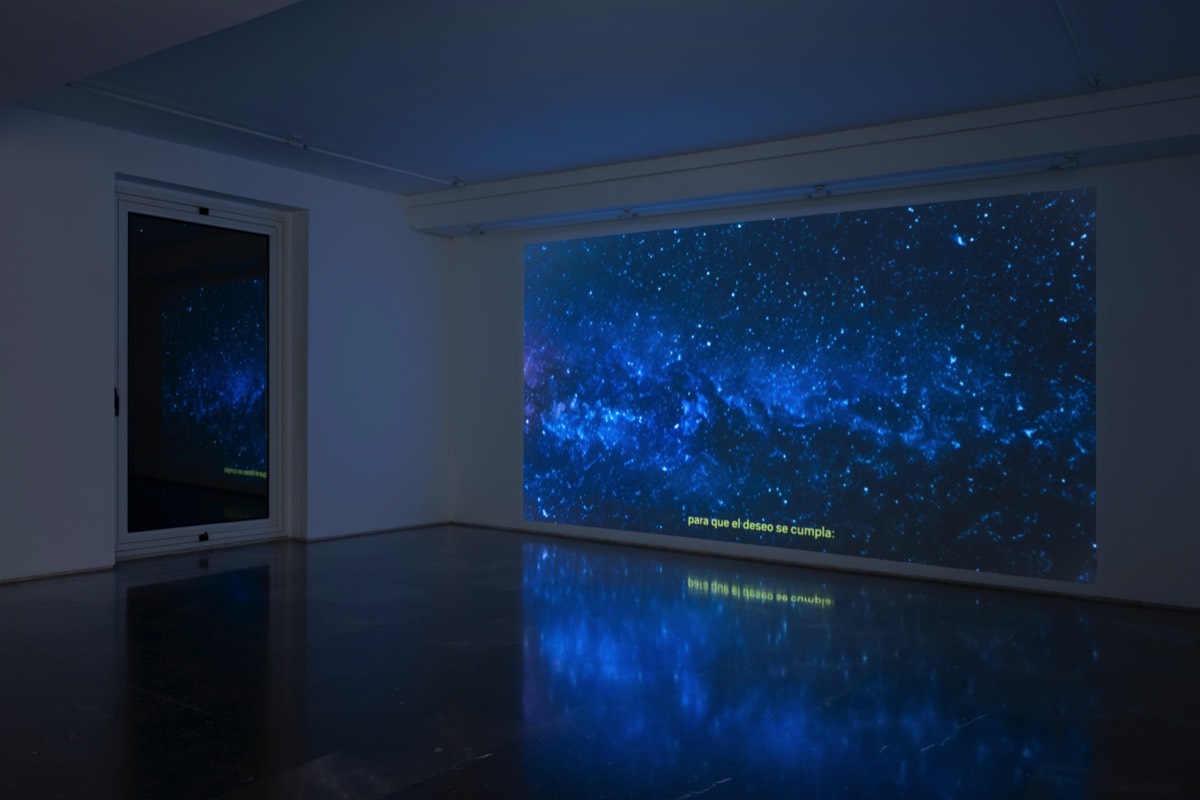
In Lucky Images (2024), Ana Esteve Reig explores the universal desire to encounter good fortune. The video, generated using AI, functions as a “magical” device capable of simulating phenomena such as shooting stars, rainbows, or the mythical green ray. The images, although unreal, do not lose their power of suggestion: they place us in a territory between simulation, the digital, and emotional experience. This work reflects on the symbolic value of the image and on how AI—now transformed into an algorithmic oracle—shapes our expectations, hopes, and ways of seeing.
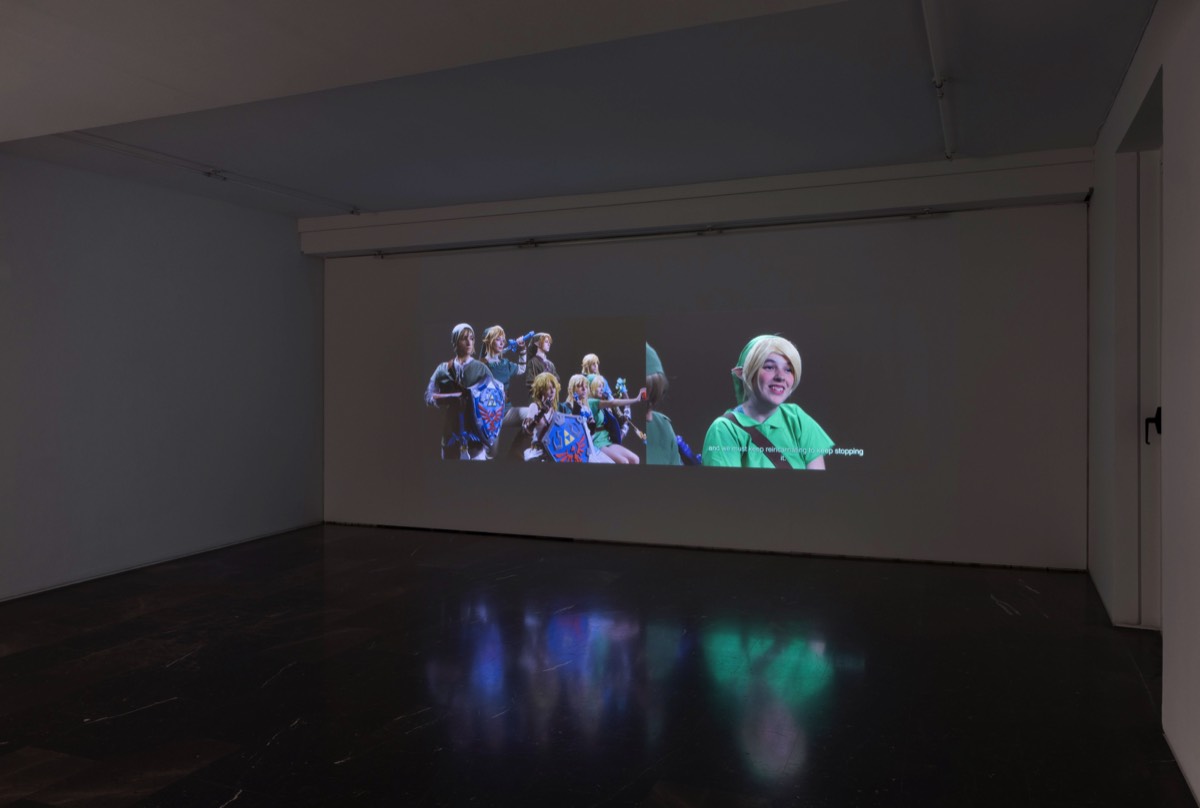
The audiovisual diptych Link, a Love Story (2024) delves into the phenomenon of cosplay as an act of devotion and a mechanism for the construction of identity. Its characters embody Link, the hero of the The Legend of Zelda universe, a figure conceived as a bridge between the player and the virtual world. The work emphasizes how the study of gesture, the imitation of movements, and the meticulous re-creation of the character reveal the capacity of video games to articulate communities, affections, and shared narrative).
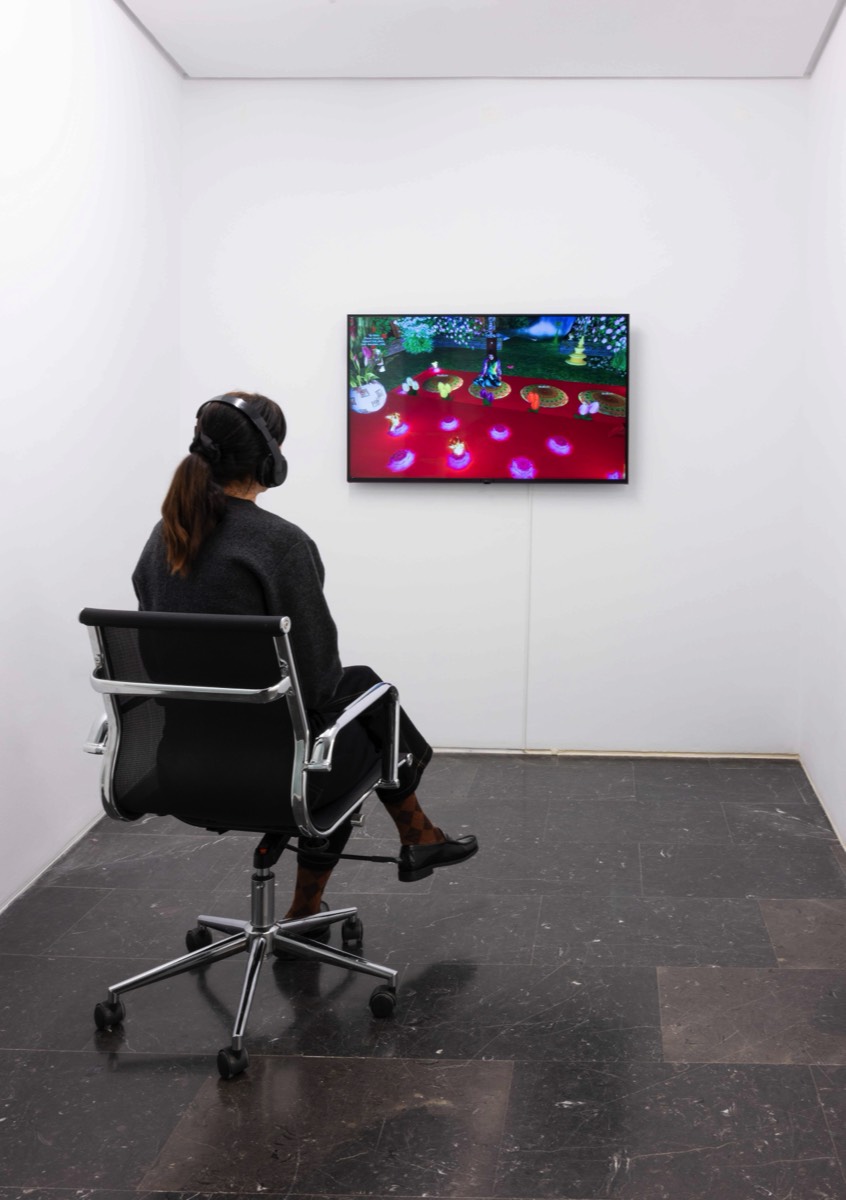
In Estudios del parpadeo (2022), we enter a landscape composed of Metaverse environments— primarily Second Life—guided by testimonies that examine discomfort, escapism, and the search for personal transformation. The work establishes a parallel between virtual immersion, meditation, and other spiritual practices, proposing the digital as a space from which to inhabit other forms of presence. The figure of the avatar, with a genealogy ranging from Hindu theology to science fiction, becomes here a symbol of transition, learning, and multiplicity.
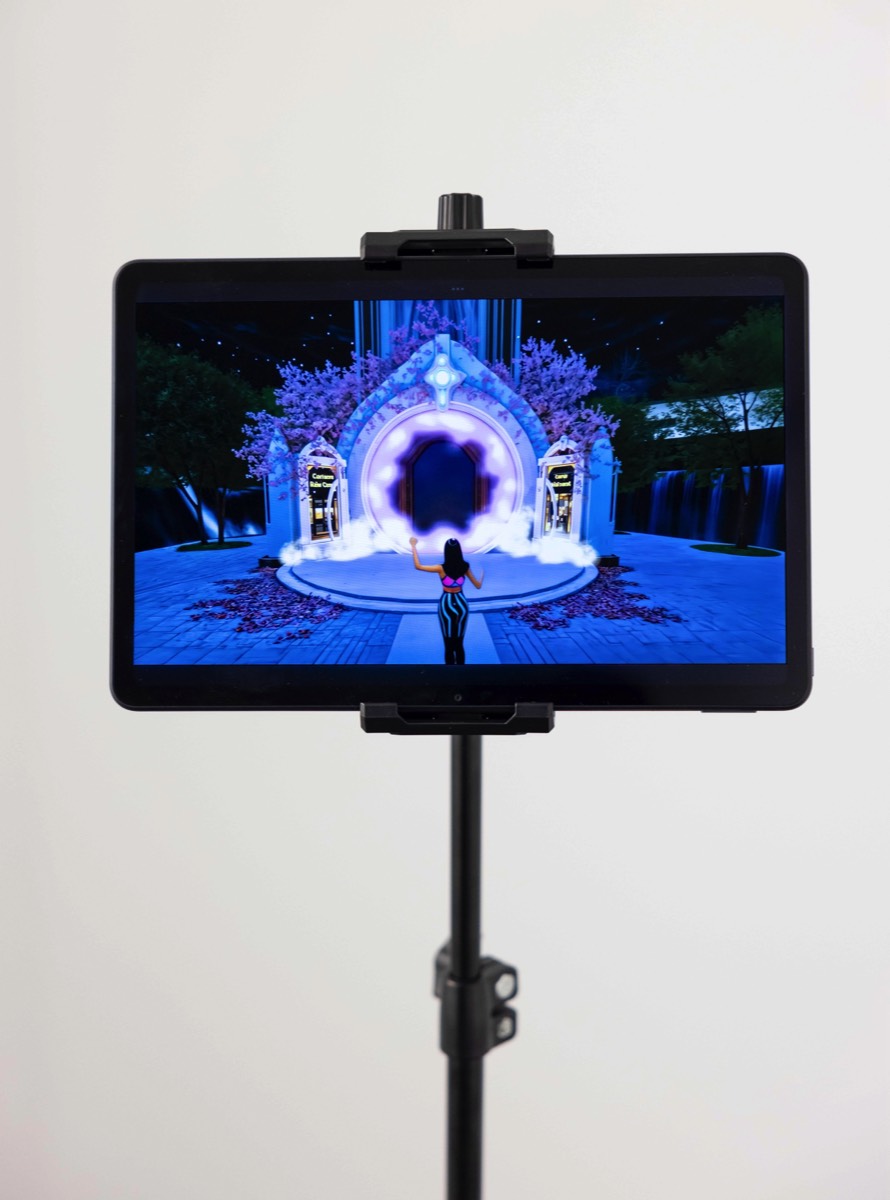
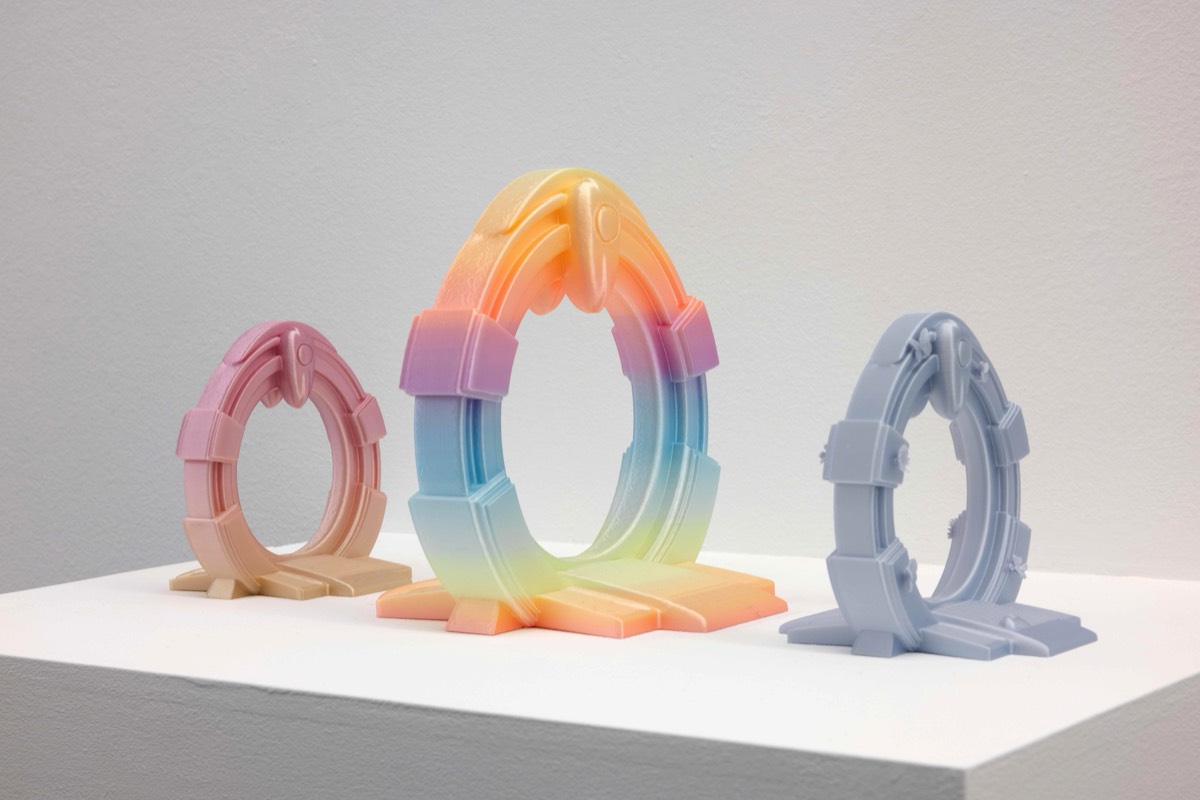
The exhibition is completed by the premiere of Lilith (2026), an AI-generated work centered on a female character who endlessly traverses portals within a virtual environment. The piece revisits the mythological figure of Lilith, traditionally framed from a patriarchal perspective as a dangerous woman: an archetype of radical freedom. By placing an autonomous female character in a video game–inspired setting—where representations of women remain scarce or hypersexualized— the artist activates a necessary critique of the cultural imaginaries that shape our present. The protagonist’s infinite journey through portals can be interpreted as an autobiographical video in which the artist’s alter ego loops in a struggle to break free from the limitations that pursue her practice as a video artist, as well as the barriers she encounters in her everyday life as a woman. The exhibition concludes with a 3D sculpture based on one of the portals from the video Lilith (2026): a liminal object that materializes the passage between worlds and functions as a physical threshold to the virtual narratives that run throughout the exhibition.
As Remedios Zafra reminds us, “screens today are windows from which we expose ourselves and are looked at” (Un cuarto propio conectado, 2010). With Alucinaciones, Ana Esteve Reig invites us to consider how contemporary technologies—AI, video games, and metaverses—reconfigure our ways of seeing and being. Her research and artistic production present these screens as fertile spaces in which to think and imagine other possibilities of desire and existence in the here (real) and the now (virtual).